
Introduction
Overview of AI’s Rapid Evolution
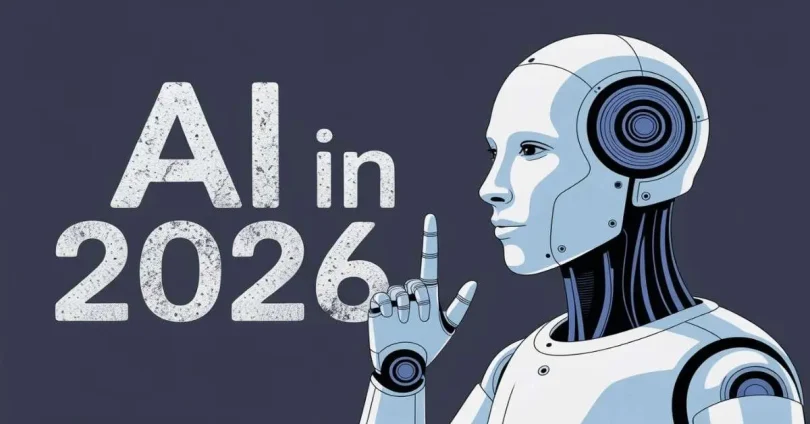
Artificial Intelligence (AI) has evolved at an unprecedented pace over the past decade, transforming from a futuristic concept into a practical force reshaping industries, businesses, and daily life.
Why 2026 is a Crucial Year for Artificial Intelligence
The year 2026 marks a pivotal moment in this journey. AI is no longer confined to experiments or niche applications—it is now moving toward real-world, large-scale adoption across sectors such as healthcare, finance, logistics, and creative industries.
Shift from Experimental AI to Real-World, Large-Scale Adoption
This shift signifies a transition from AI as a tool for research to AI as an integral driver of efficiency, innovation, and strategic decision-making. Understanding this evolution is key for businesses, professionals, and individuals who aim to harness AI’s potential in the coming years.
Major AI Breakthroughs in 2026
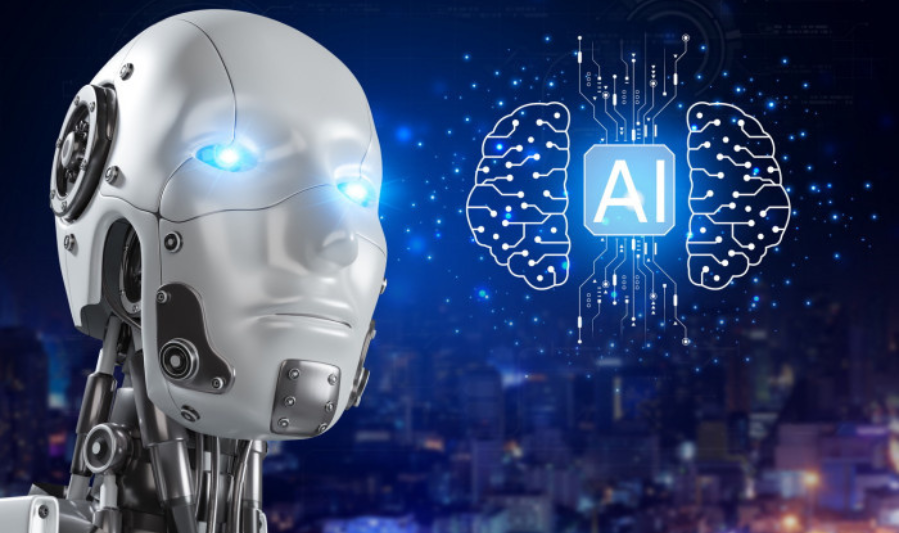
Advancements in Large Language Models and Multimodal AI
2026 is witnessing significant progress in large language models (LLMs), which are becoming more accurate, context-aware, and capable of handling complex tasks. Multimodal AI—systems that process text, images, audio, and video together—is enabling more human-like understanding and interaction across platforms.
These advancements allow AI to:
- Generate richer content with improved coherence
- Understand and respond to diverse inputs simultaneously
- Enhance real-world applications in customer service, education, and creative industries
Faster, More Efficient AI Systems with Lower Energy Usage
Efficiency is a critical focus in AI development. New AI architectures in 2026 are designed to deliver faster performance while consuming less energy, making large-scale AI deployment more sustainable and cost-effective.
Key benefits include:
- Reduced operational costs for businesses
- Lower environmental impact of data centers
- Increased accessibility of AI technologies for smaller organizations
Improved AI Reasoning, Planning, and Decision-Making Abilities
AI is moving beyond pattern recognition to advanced reasoning, planning, and autonomous decision-making. This enables systems to solve complex problems, optimize workflows, and make strategic recommendations in real-time.
Applications include:
- AI-driven logistics and supply chain optimization
- Autonomous financial analysis and risk assessment
- Smart healthcare diagnostics and treatment planning
AI in Consumer Technology
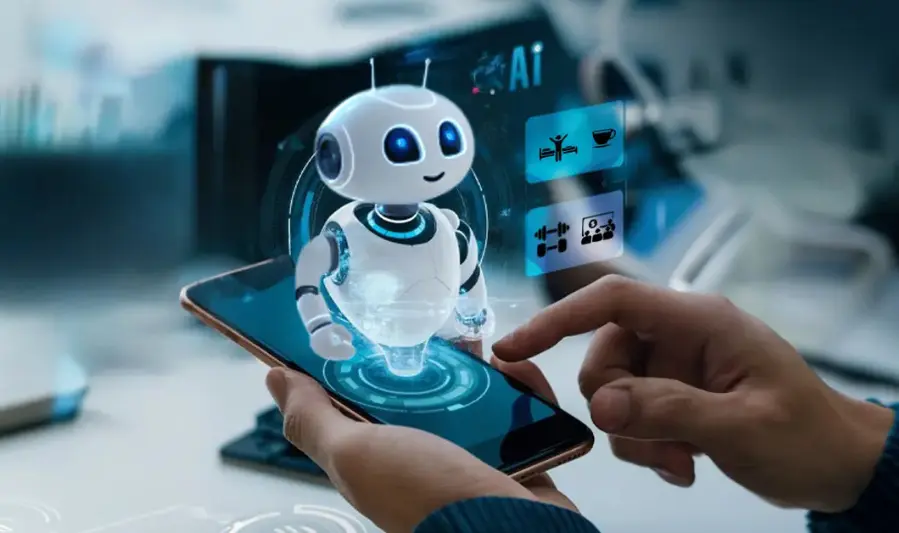
AI-Powered Smartphones, Laptops, and Wearable Devices
In 2026, consumer electronics are increasingly integrated with AI capabilities. Smartphones, laptops, and wearable devices are not just tools—they are intelligent companions that anticipate user needs and enhance everyday productivity.
AI features in these devices include:
- Smart suggestions and predictive text for faster communication
- Health and fitness tracking with personalized insights
- Adaptive performance and battery optimization based on usage patterns
Smart Homes with Predictive and Personalized AI Features
Smart home technology is reaching a new level of intelligence. AI-powered systems are learning from user behavior to create personalized, predictive environments.
Examples of AI-driven smart home features:
- Automated lighting, climate, and security adjustments
- Predictive energy management to reduce costs
- Personalized entertainment and lifestyle recommendations
AI Assistants Becoming More Proactive and Human-Like
Virtual assistants are evolving into proactive, human-like companions capable of anticipating needs and completing tasks autonomously.
Key capabilities include:
- Scheduling and task management without constant user input
- Context-aware communication that adapts to personal preferences
- Seamless integration across devices and platforms
Enterprise and Business AI Trends
AI Automation in Workflows and Operations
In 2026, AI is increasingly automating routine and complex business tasks, streamlining operations and freeing human resources for higher-value work.
Applications include:
- Automated customer support and query resolution
- Intelligent process automation in finance, HR, and logistics
- Reducing manual errors and speeding up operational processes
Multi-Agent AI Systems Managing Complex Business Tasks
Businesses are adopting multi-agent AI systems, where multiple AI models collaborate to manage intricate operations. These systems can coordinate across departments, simulate scenarios, and optimize workflows autonomously.
Benefits include:
- Efficient handling of multi-step business processes
- Improved coordination between departments and projects
- Enhanced adaptability to changing market conditions
AI-Driven Analytics for Real-Time Decision Making
AI-powered analytics is transforming how companies make decisions. By processing large datasets in real time, businesses gain actionable insights faster than ever.
Key advantages:
- Real-time market trend analysis and forecasting
- Data-driven strategic decision-making
- Enhanced risk assessment and mitigation
Cost Reduction and Productivity Growth Through AI Adoption
The adoption of AI in enterprises directly impacts the bottom line. By automating repetitive tasks, optimizing processes, and improving accuracy, businesses achieve significant cost savings and productivity gains.
Examples include:
- Reducing labor-intensive tasks
- Minimizing operational inefficiencies
- Accelerating project delivery and scaling operations
You may also like to read these posts:
Trend Forecast: Fashion Trends 2026 You Need to Know
Top Latest Fashion Style Trends to Update Your Wardrobe
Luxury Living Lifestyle Secrets for a Premium Way of Life
How AI Is Shaping the Future in 2026: Key Headlines You Should Know
AI Hardware and Infrastructure Developments
Next-Generation AI Chips and Processors
2026 is seeing a surge in advanced AI-specific hardware, designed to handle complex models more efficiently and at higher speeds. Next-generation chips are powering faster computations while reducing latency, enabling more sophisticated AI applications.
Key developments include:
- Specialized processors for deep learning and neural networks
- Improved parallel processing capabilities for large datasets
- Enhanced support for AI workloads in consumer and enterprise devices
Competition Among Global Semiconductor Companies
The AI boom has intensified competition among semiconductor manufacturers. Leading global companies are racing to produce faster, more efficient chips, driving innovation and shaping the AI landscape.
Impacts of this competition:
- Faster adoption of cutting-edge AI hardware worldwide
- Lower costs and broader accessibility for AI technologies
- Accelerated research and development in AI computing
Edge AI vs Cloud AI Growth
AI is moving closer to users with edge computing, complementing traditional cloud AI solutions. Edge AI processes data locally on devices, reducing latency and bandwidth usage, while cloud AI continues to provide scalable processing power for complex tasks.
Benefits of each approach:
- Edge AI: Real-time decision-making, privacy, and offline functionality
- Cloud AI: Massive computational power, collaboration, and centralized management
Energy-Efficient AI Data Centers
Sustainability is a critical focus for AI infrastructure. Modern AI data centers are designed for high efficiency, reducing energy consumption while supporting massive workloads.
Innovations include:
- Advanced cooling systems and low-power processors
- Renewable energy integration for AI operations
- Optimized resource allocation to reduce environmental impact
Faqs:
What are the biggest AI breakthroughs in 2026?
In 2026, AI has advanced in multimodal systems, faster reasoning, predictive analytics, and more energy-efficient architectures, impacting industries from healthcare to consumer tech.
How is AI affecting businesses in 2026?
AI is automating complex workflows, improving decision-making, and driving productivity through multi-agent systems and real-time analytics across sectors.
What new AI hardware is emerging in 2026?
Next-generation AI chips, energy-efficient processors, edge computing devices, and advanced data center infrastructure are leading the hardware revolution.
How are governments regulating AI in 2026?
Countries are introducing AI laws focused on ethics, data privacy, transparency, and accountability to balance innovation with safety and fairness.
How will AI impact jobs and education in 2026?
AI is transforming job roles, creating new skill demands, and revolutionizing education with personalized AI tutors and lifelong learning platforms.
Conclusion
The year 2026 marks a pivotal moment for artificial intelligence, as AI moves from experimental technologies to real-world, large-scale applications. From breakthroughs in multimodal systems and advanced hardware to transformative impacts on business, healthcare, and education, AI is reshaping how we live, work, and innovate. While challenges like regulation, ethics, and workforce adaptation remain, staying informed and embracing AI responsibly will allow individuals and organizations to leverage its full potential. 2026 is not just about AI innovation—it’s about practical, measurable impact shaping the future.