
Introduction
Overview of Machine Learning’s Rapid Evolution
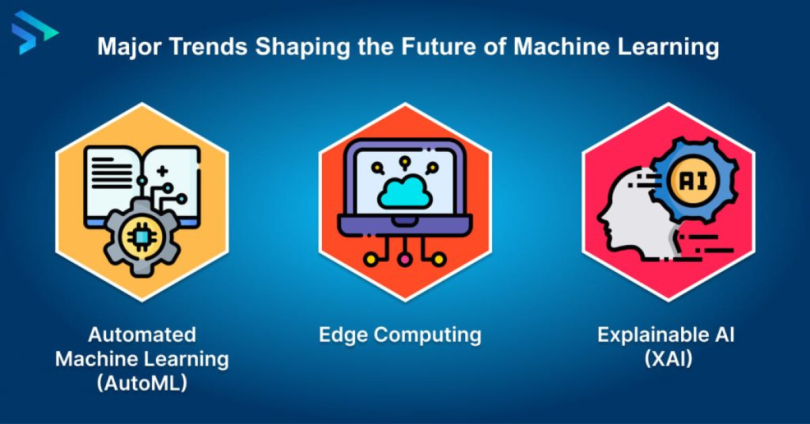
Machine Learning (ML) has evolved rapidly over the past decade, moving from basic data analysis models to highly sophisticated systems capable of learning, adapting, and improving in real time. Today, ML powers everything from recommendation engines and fraud detection to medical diagnostics and autonomous technologies.
Why 2026 Is an Important Year for ML Innovation
The year 2026 marks a major turning point in machine learning innovation. Advances in computing power, data availability, and algorithmic efficiency are enabling ML systems to operate at scale, adapt dynamically, and deliver real-world impact across industries such as healthcare, finance, manufacturing, and education.
Difference Between Traditional ML and Modern Adaptive Systems
Traditional ML systems relied on static models trained on fixed datasets, requiring frequent manual updates. In contrast, modern adaptive ML systems continuously learn from new data, adjust to changing environments, and make more accurate predictions over time.
This shift toward adaptive intelligence is transforming ML from a support tool into a core driver of automation, decision-making, and innovation.
Evolution of Machine Learning Models
Shift from Rule-Based Systems to Deep Learning
Early machine learning systems relied heavily on rule-based logic and handcrafted features, which limited flexibility and scalability. Over time, deep learning models replaced these approaches by automatically learning patterns from large datasets.
This shift enabled:
- Improved accuracy in image, speech, and language tasks
- Greater adaptability to complex, real-world data
- Reduced reliance on manual feature engineering
Transformer-Based and Hybrid Architectures
Transformer-based architectures have become a foundation of modern ML systems, enabling better handling of long-range dependencies and contextual understanding.
Key developments include:
- Hybrid models combining transformers with traditional neural networks
- Enhanced performance in natural language processing and vision tasks
- More efficient training and inference at scale
Smaller, Faster, and More Efficient ML Models
Recent innovations focus on building compact and efficient models without sacrificing performance. These models are optimized for speed, cost, and energy efficiency.
Advantages include:
- Deployment on edge devices and low-resource environments
- Faster inference for real-time applications
- Reduced infrastructure and operational costs
Reduced Dependency on Labeled Data
Modern machine learning increasingly relies on self-supervised and semi-supervised learning, reducing the need for large labeled datasets.
This evolution allows:
- Faster model development with less human annotation
- Improved learning from unstructured and unlabeled data
- Greater scalability across diverse domains and industries
New Machine Learning Algorithms & Techniques

Self-Supervised and Unsupervised Learning Advancements
Machine learning is increasingly shifting toward self-supervised and unsupervised learning, reducing reliance on labeled datasets. These approaches allow models to learn patterns directly from raw data.
Key advancements include:
- Learning representations from large, unstructured datasets
- Improved performance in language, vision, and audio tasks
- Faster and more scalable model training with minimal human annotation
Reinforcement Learning Improvements for Real-World Environments
Reinforcement learning (RL) is evolving to handle complex, real-world environments more effectively. New algorithms focus on stability, safety, and efficiency.
Improvements include:
- Better exploration strategies and reward modeling
- Safer decision-making in dynamic and uncertain environments
- Applications in robotics, autonomous systems, and resource optimization
Federated Learning for Privacy-Focused ML
Federated learning enables decentralized model training while keeping data on local devices, addressing privacy and security concerns.
Benefits include:
- Enhanced data privacy and regulatory compliance
- Reduced data transfer and centralized storage risks
- Collaboration across organizations without sharing raw data
Generative Models and ML Integration
ML’s Role in Generative AI Systems
Machine learning is the core engine behind generative AI, enabling systems to create new content by learning patterns from large datasets. Advanced ML models allow generative systems to produce outputs that are coherent, realistic, and context-aware.
Key roles of ML include:
- Learning complex data distributions
- Adapting generation based on user input and context
- Continuously improving output quality through feedback
Image, Video, and Speech Generation Improvements
Recent ML advancements have significantly enhanced image, video, and speech generation quality and realism.
Improvements include:
- High-resolution image synthesis with better detail and accuracy
- Video generation with smoother motion and temporal consistency
- Natural-sounding speech synthesis with emotional and tonal variation
Cross-Modal Learning and Representation Learning
Cross-modal learning enables ML systems to understand and connect multiple data types, such as text, images, audio, and video.
Benefits include:
- Unified representations across different modalities
- Improved content generation and retrieval
- Enhanced performance in multimodal applications
Creative and Industrial Applications
Generative ML models are transforming both creative industries and industrial workflows.
Applications include:
- AI-assisted art, music, design, and content creation
- Simulation and modeling for manufacturing and engineering
- Automated design optimization and rapid prototyping
Machine Learning Infrastructure & MLOps
Automated ML Pipelines and Lifecycle Management
Modern MLOps focuses on automating the entire machine learning lifecycle, from data preparation to model deployment. Automated pipelines improve efficiency, consistency, and scalability.
Key capabilities include:
- Continuous data ingestion and preprocessing
- Automated model training, testing, and validation
- Version control and reproducibility for ML models
Model Deployment, Monitoring, and Retraining
Deploying ML models is only the beginning. Ongoing monitoring and retraining ensure models remain accurate and reliable over time.
Important practices include:
- Performance monitoring and drift detection
- Automated retraining using updated data
- Safe deployment strategies such as A/B testing and rollback mechanisms
Cloud-Based ML Platforms and Hybrid Infrastructure
Cloud platforms provide scalable infrastructure for training and deploying ML models, while hybrid setups combine cloud and on-premise resources.
Benefits include:
- On-demand compute and storage for ML workloads
- Integration with enterprise systems and data pipelines
- Flexibility to meet regulatory and performance requirements
You may also like to read these posts:
Trend Forecast: Fashion Trends 2026 You Need to Know
Top Latest Fashion Style Trends to Update Your Wardrobe
Luxury Living Lifestyle Secrets for a Premium Way of Life
How AI Is Shaping the Future in 2026: Key Headlines You Should Know
Edge ML for Real-Time Decision-Making
Edge ML enables local inference on devices, supporting real-time decisions with minimal latency.
Applications include:
- Autonomous vehicles and robotics
- Smart sensors and IoT devices
- Industrial automation and predictive maintenance
Faqs:
What are the most important machine learning updates in 2026?
Major updates include self-supervised learning, more efficient model architectures, improved reinforcement learning, federated learning, and stronger integration with AI systems.
How is machine learning evolving compared to previous years?
Machine learning is becoming faster, more accurate, and less dependent on labeled data, with models capable of learning continuously and adapting in real-time environments.
Which industries are benefiting most from machine learning updates?
Healthcare, finance, retail, manufacturing, transportation, and cybersecurity are leading industries leveraging machine learning for automation, prediction, and optimization.
What challenges still exist in machine learning development?
Challenges include data quality issues, model bias, interpretability, high computing costs, and deploying ML systems at scale.
How can beginners and professionals stay updated with machine learning trends?
By following ML research blogs, tech news platforms, online courses, open-source projects, and attending AI and machine learning conferences.
Conclusion
Machine learning updates in 2026 demonstrate the rapid evolution of algorithms, tools, and applications across industries. From self-supervised learning and federated models to real-world implementations in healthcare, finance, and retail, ML continues to transform the way businesses operate and how individuals interact with technology. While challenges like data quality, bias, and scalability remain, staying informed and adopting responsible practices ensures organizations and professionals can fully harness the power of machine learning. These updates are not just technological advancements—they are shaping the future of innovation and decision-making.